Request a consultation
Brisbane Dental Implants · Bulimba

Dental Implants in Brisbane

Replace one tooth, several teeth or a full arch with a treatment plan tailored to your mouth. Visit our Bulimba clinic for a free implant consultation and 3D CBCT scan.

Single implant and crown from $3,995
For suitable, site-ready cases. Additional procedures cost extra.

Free

Initial Implant Consultation

  • 3D CBCT scan for implant planning
  • Suitability and risk discussion
  • Written treatment options
  • Clear staged fee estimate

Consultation and scan are free. A $200 records fee applies only if you choose to take the consultation records away.

Request Free Consultation

Our team will contact you to arrange a time.

Free Initial Consultation (Valued at $300 RRP)
Everything Done On-Site
2,000+ Implants Placed
Full Range of Solutions
Overview

What a dental implant is

A dental implant is a titanium or ceramic fixture placed in the jawbone to support a crown, bridge or denture. The fixture acts as a replacement tooth root; an abutment connects it to the visible replacement tooth. Treatment involves surgery, healing and ongoing maintenance.

Single dental implant icon illustration

Single tooth implant

A single implant can replace one missing tooth without preparing the adjacent teeth for a conventional bridge. It usually involves an implant fixture, an abutment and a custom crown. Read more about single tooth implant treatment.

Hybrid dental implant bridge icon

Multiple tooth replacement

Two or more implants may support a bridge where several teeth are missing. The number of implants depends on the length of the gap, bite forces, bone volume and the type of final restoration planned.

All-on-4 dental implants icon

Full arch implants

Full arch treatment can replace a complete upper or lower set of teeth using options such as All-on-4 dental implants, All-on-6 or implant-retained dentures.

Placement type, restoration design, diameter and material are compared on the types of dental implants page.

Costs

Dental implant pricing in Brisbane

For suitable site-ready single tooth cases at Brisbane Dental Implants, a single implant bundle starts from $3,995 before any applicable health fund rebate. More complex treatment is quoted after assessment.

Single implant from $3,995

Our standard bundle includes the implant post, surgery, abutment and final full-contour zirconia crown, plus the free consultation and 3D CBCT scan. The $3,995 starting fee applies to suitable, site-ready cases, before any health fund rebate.

Additional procedures

Extraction, bone grafting, sinus lift, temporary teeth, gum grafting, sedation or complex provisional restorations can add cost. See the full implant costs and itemised fees guide.

Full arch treatment

Full mouth or full arch treatment is planned differently because it may involve multiple implants, temporary teeth, a final bridge and staged maintenance. Learn more about full mouth dental implants.

A site-ready case has sufficient bone and healthy tissues for the planned implant, without extra preparatory treatment. Your dentist confirms this after examination. Front-tooth cases needing additional aesthetic work may have a different fee.

Payments can be staged around treatment. Health fund rebates depend on your policy and item numbers; check your written quote with your fund. Read about payment options and their conditions.

Request a free consultation and written quote
Your implant team

Implant care at our Bulimba clinic

Assessment, 3D planning, surgery and restoration are coordinated at one location, with an on-site dental laboratory.

Dr Virginia Han, principal dental surgeon and lead implant clinician

Dr Virginia Han

Principal Dental Surgeon & Lead Implant Clinician · BDSc Hons (UQ)

Dr Han leads implant planning, including digital surgical guides and assessment of bone support. Implant surgery is performed by Dr Han or Dr Sae Mi Bok. The restorative phase is usually managed by Dr Elsa Zhu, with ongoing gum care and implant maintenance supported by Mr Dennis Han, Oral Health Therapist.

Your consultation identifies who will be responsible for each stage, including reviews and management of complications.

Read Dr Han’s qualifications and clinical role

Our Bulimba facility has CBCT imaging and digital intraoral scanning to help assess bone, tooth position and the planned restoration. Meet the clinical team.

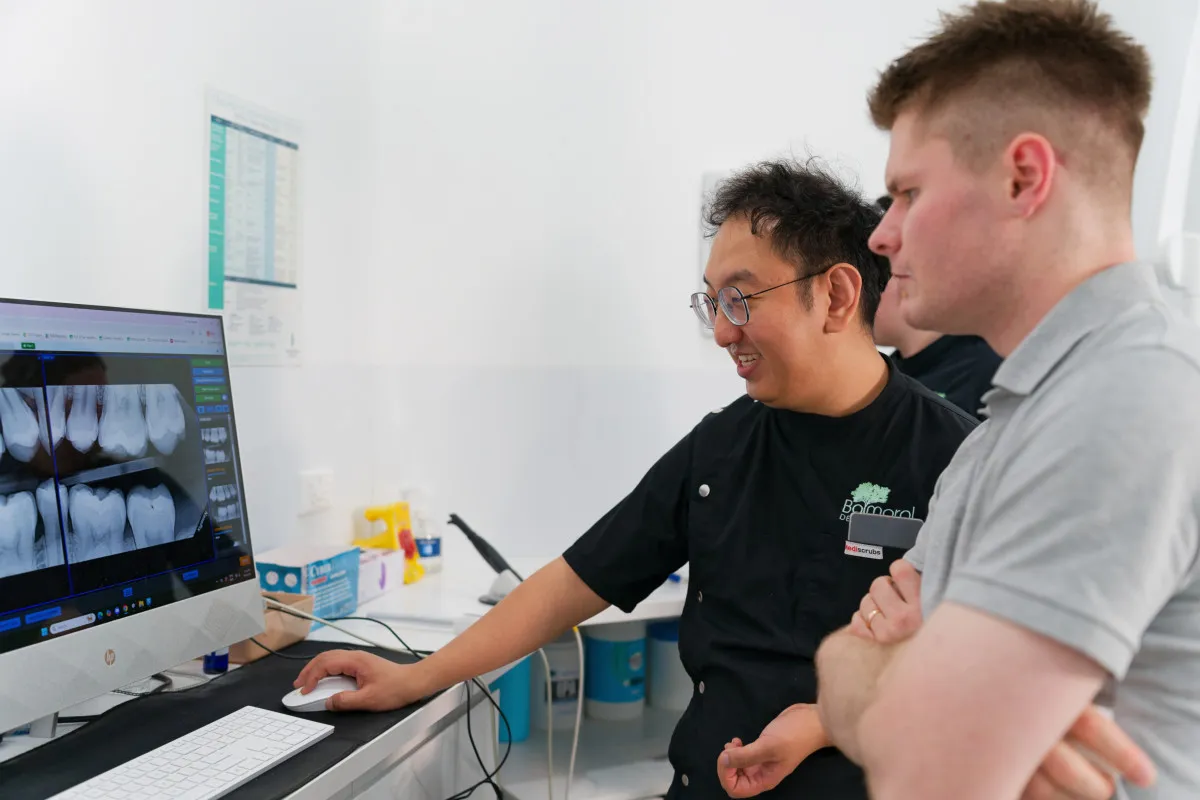
Clinician reviewing dental scans and planning implant treatment with a patient
Suitability

Who may be suitable for dental implants?

Implants may suit adults who are missing teeth, have finished jaw growth, and have enough healthy bone and gum support for stable placement. A suitable patient also needs oral hygiene habits and general health that support healing. Smoking, uncontrolled diabetes, active gum disease, heavy bite forces, some medications and previous radiotherapy can increase risk or change the treatment plan.

Suitability is assessed with a clinical examination, periodontal screening, bite assessment and 3D CBCT imaging. For a detailed breakdown of clinical requirements, see our guide on who is suitable for dental implants. The scan helps map the position of nerves, sinuses, adjacent roots and available bone. If there is not enough bone, bone grafting in Brisbane or a different restoration may be discussed.

Some patients are better served by a bridge, denture, orthodontic space closure or stabilising the existing teeth before implant treatment. A careful plan should compare the benefits, limitations, costs and maintenance requirements of each option.

Compare your options

Dental implants, bridges or dentures?

Replacing a missing tooth does not always require an implant. Compare the effect on nearby teeth, the need for surgery, cleaning and cost with your dentist.

Key differences to discuss at consultation
OptionHow it is supportedMain considerations
Dental implantA fixture in the jaw supports a crown or bridge; implants can also retain a denture.Can avoid preparing adjacent teeth. Requires surgery, adequate support, healing time and lifelong cleaning and reviews.
Conventional dental bridgeNeighbouring teeth support the replacement tooth or teeth.Usually avoids implant surgery. May require reshaping supporting teeth; their health and the span of the gap matter.
Removable dentureA removable appliance replaces some or all teeth.Usually avoids implant surgery and may have a lower initial cost. Stability, comfort and cleaning differ from fixed teeth.

Where possible, preserving a treatable natural tooth should also be discussed. The right choice depends on your examination and priorities. For a closer look at a conventional bridge against a single implant, read dental bridge vs dental implant.

Process

The dental implant process

Most implant plans are staged so the bone and gum tissues can heal before the final tooth or teeth are fitted.

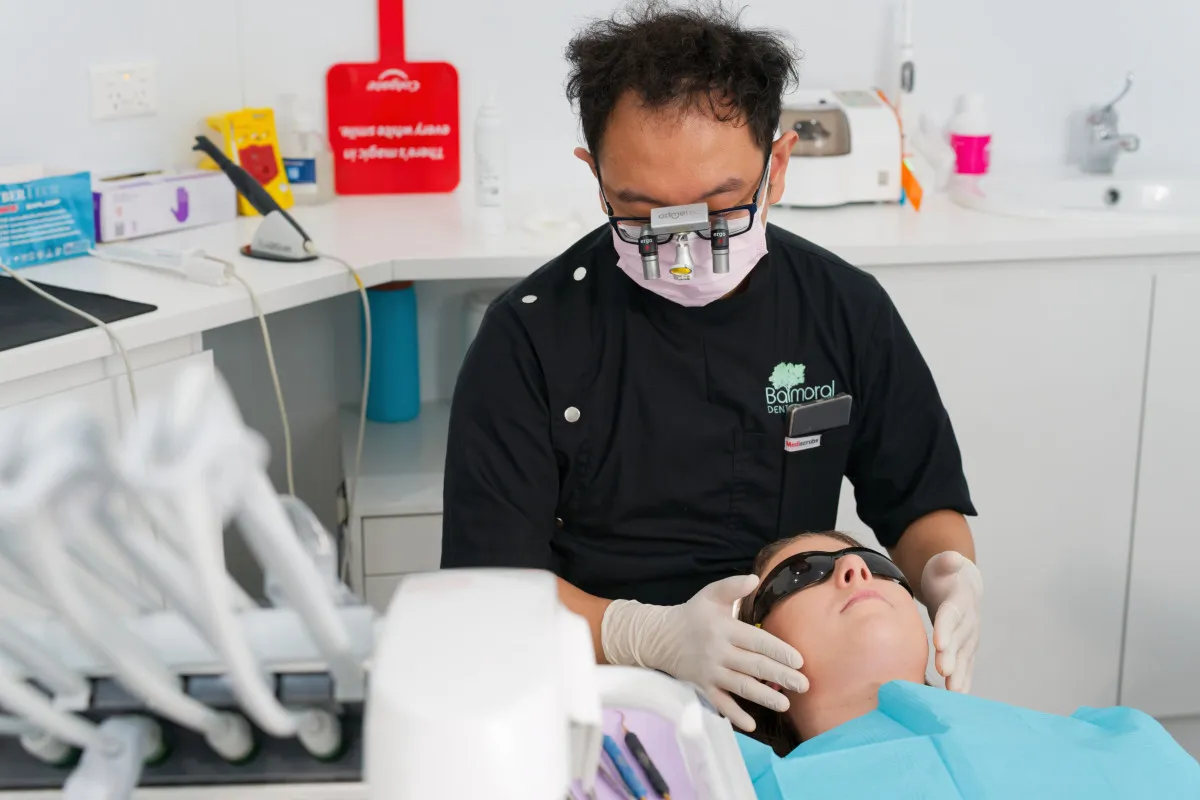
Implant treatment in progress at the Bulimba surgical suite

Consultation and scan

Your dentist reviews the missing tooth area, medical history, goals, gum health and bite. A CBCT scan is used to plan implant position and identify anatomical risks.

Stabilise the mouth

Decay, gum disease, infection or unstable teeth are treated before implant placement. This stage may include extraction, temporary teeth or hygiene therapy.

Implant placement

The implant fixture is placed under local anaesthetic, with sedation options discussed where appropriate. Some cases use a surgical guide created from digital planning.

Healing phase

The implant is left to integrate with the jawbone. Healing time varies but commonly takes several months, especially where grafting or infection management is involved.

Final restoration

A custom crown, bridge or full arch prosthesis is made to fit the bite and surrounding teeth. Maintenance visits help monitor gum and bone health over time.

Preparation

How to prepare for your implant consultation

The more complete your information is, the more useful your consultation will be.

Bring a list of current medications, medical conditions, allergies, previous dental treatment, any recent x-rays and any quotes or treatment plans you have already received. If you have a denture, night guard, splint or temporary tooth, bring it with you. These appliances can reveal useful information about bite position, tooth display, speech and comfort.

It is also helpful to write down what matters most to you. Some patients prioritise fixed teeth, others prioritise fewer appointments, easier cleaning, a lower-maintenance design or a staged approach to cost. These priorities influence whether a single implant, implant bridge, full arch bridge or removable option is most appropriate.

During the visit, ask for the plan to be explained in stages: what needs to happen before surgery, what happens on the day of placement, how you will function during healing, when the final teeth are made and what long-term maintenance involves. A good consultation should make the next step clearer, even if the answer is that more diagnosis is needed before treatment can be recommended.

Healing and aftercare

Recovery and long-term implant care

Initial surgical recovery and integration with the jawbone are different stages. Soreness, swelling or bruising may occur after placement; bone healing takes longer. Many straightforward plans span several months, and grafting or complex treatment can extend this.

Follow your dentist’s instructions on food, cleaning around the surgical site, medicines and returning to work or exercise. Ask how any temporary tooth should be used during healing. Contact the treating team if pain or swelling worsens, bleeding persists, or the implant or crown feels loose.

Once healed, daily cleaning and scheduled reviews help monitor the implant, gums and bite. Read our guide to peri-implant disease and maintenance if you have bleeding or inflammation around an existing implant.

Risks

Risks and limitations to understand

Dental implants have known surgical and restorative risks. Your dentist should explain the risks that apply to your health, anatomy and treatment plan.

Surgical risks

Possible risks include swelling, bruising, bleeding, infection, delayed healing, sinus complications in the upper jaw, nerve disturbance, implant non-integration and the need for further treatment.

Restorative risks

Implant crowns, bridges and prostheses can chip, loosen, wear or need replacement. The bite may need adjustment, and some patients require a night guard to reduce overload.

Maintenance risks

Implants cannot decay, but the tissues around them can become inflamed. Peri-implant disease, bone loss and screw loosening are reasons regular reviews and home care matter.

This page is general information only and is not a substitute for advice from a registered health practitioner who has examined you.

Clinical photographs

Dental implants before and after

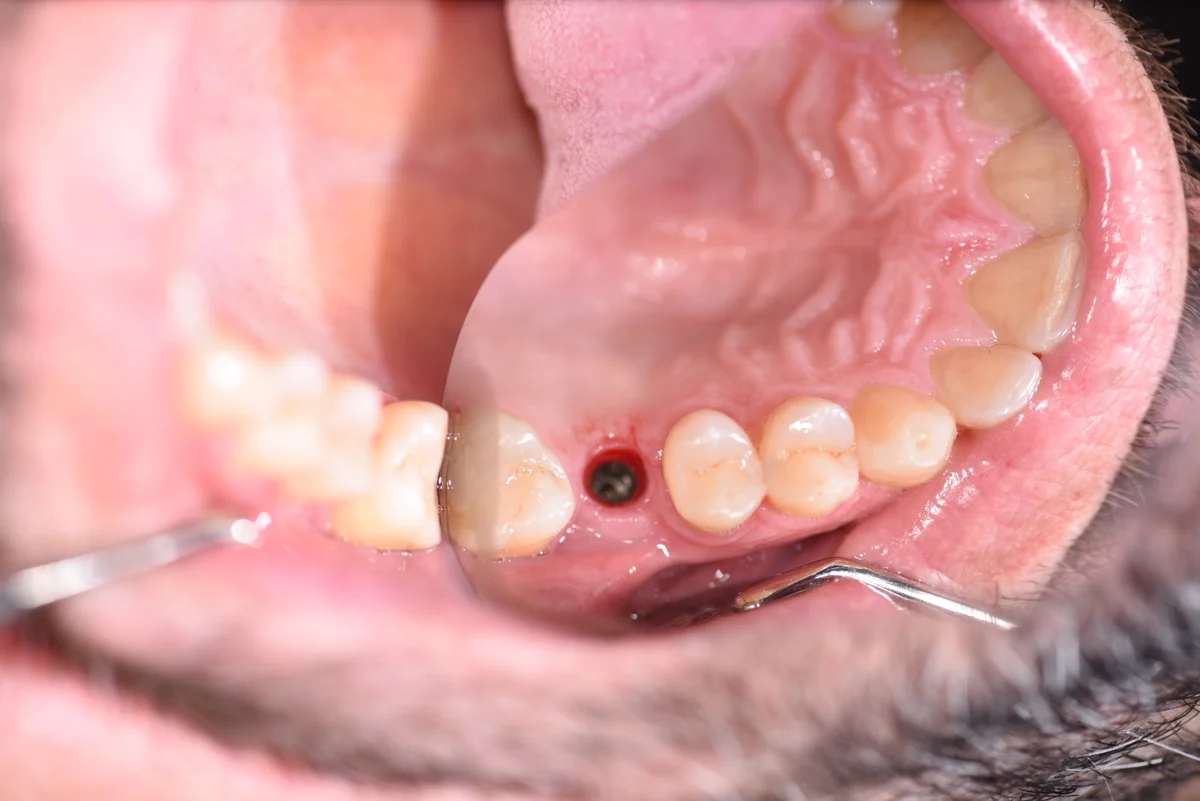
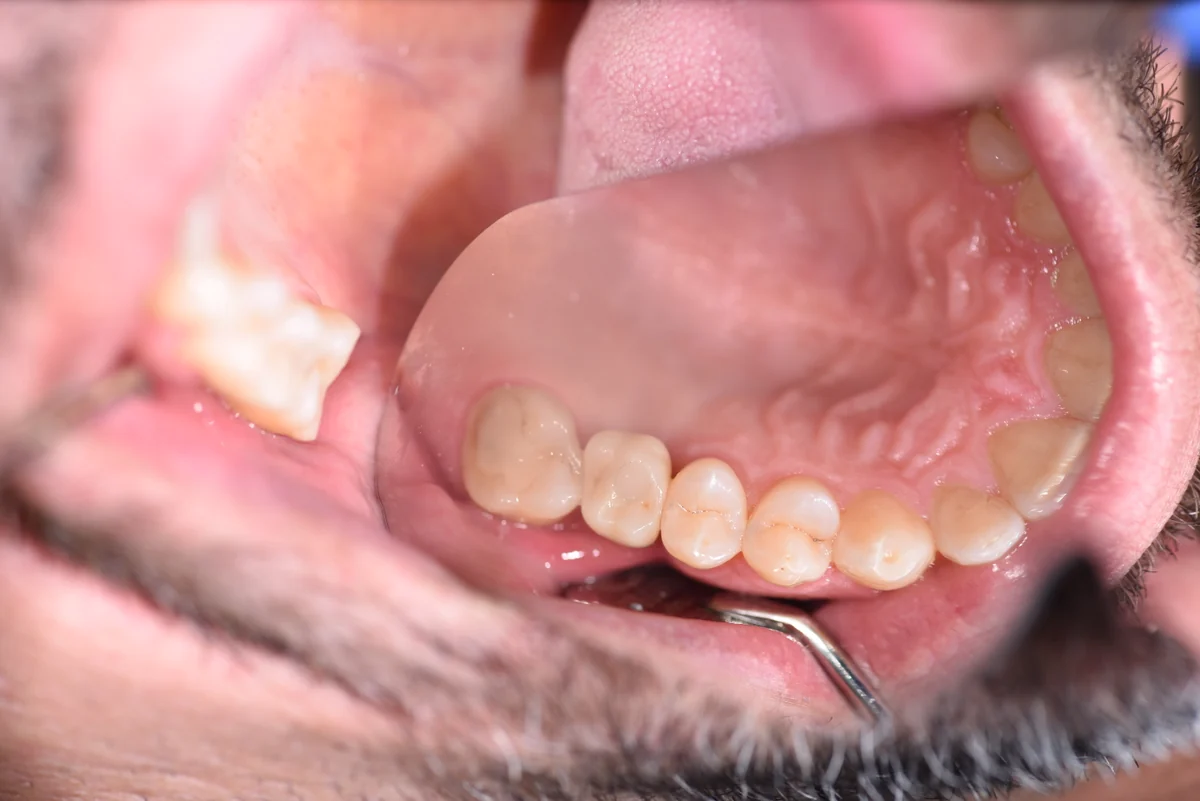
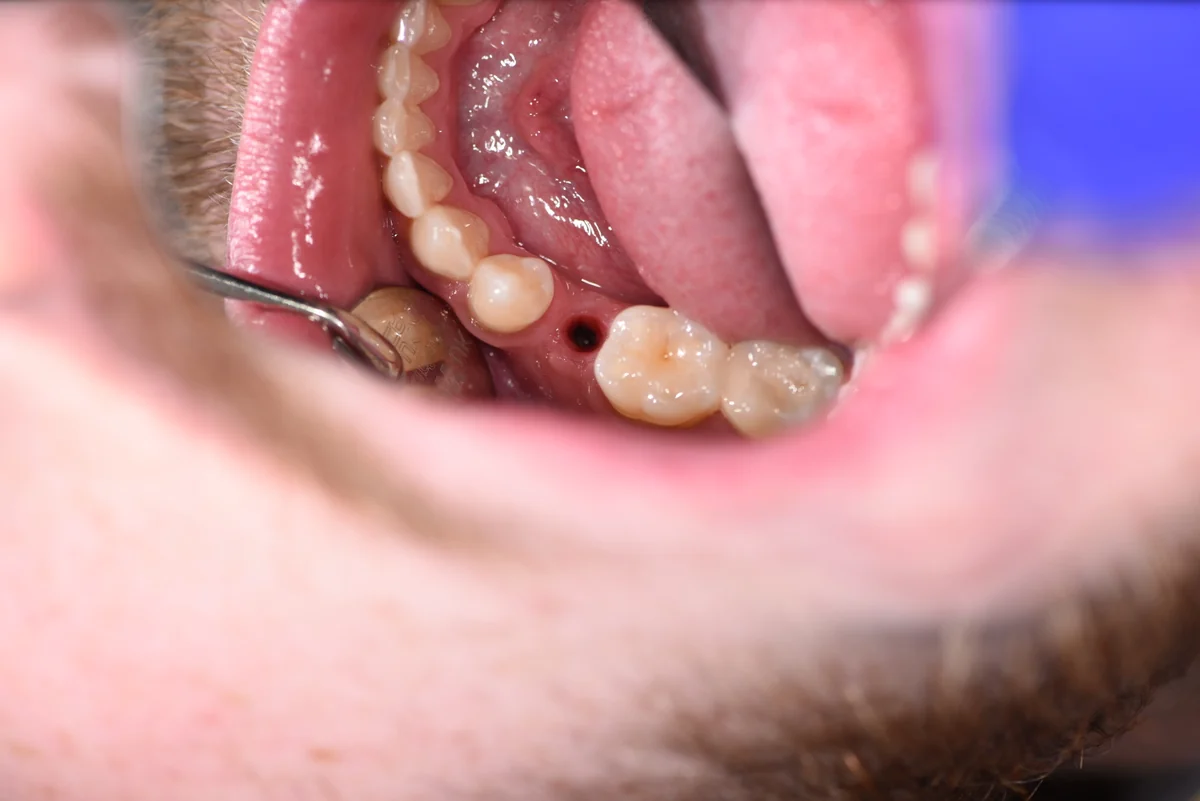
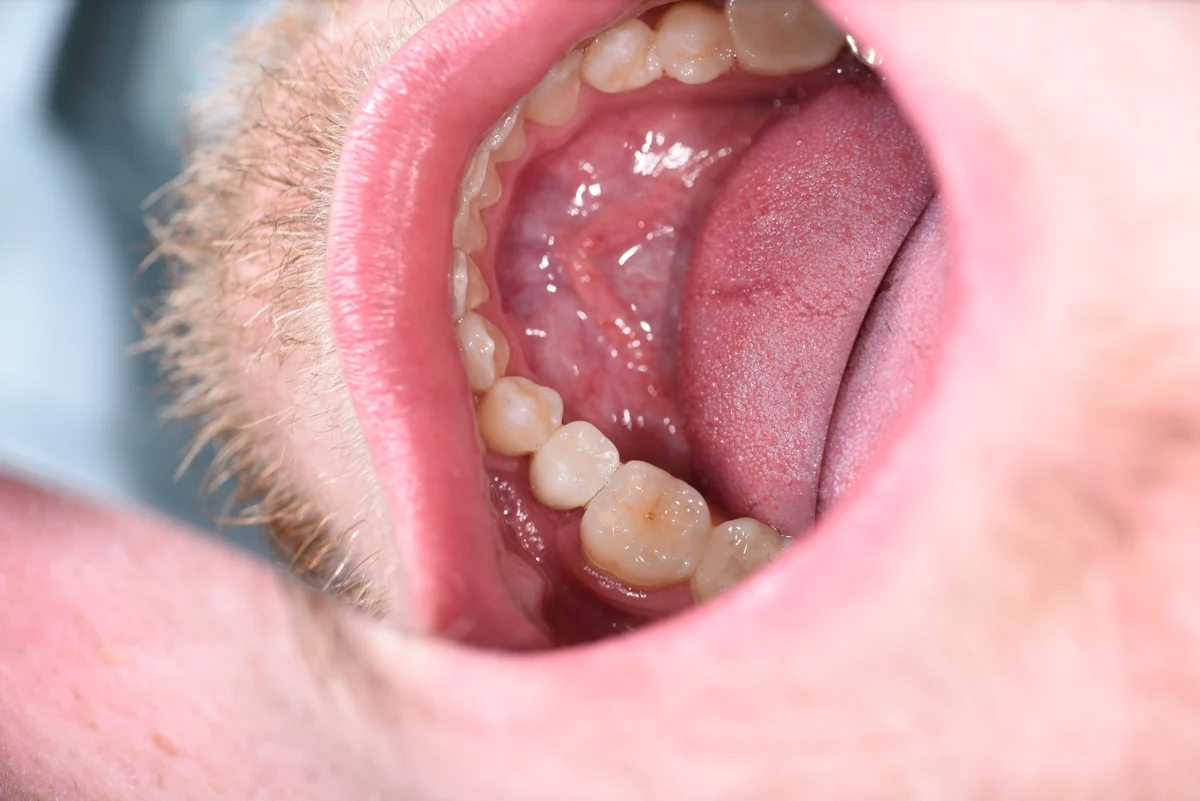
Two implant crown examples from our clinical gallery. In each pair, the implant has already been placed in the first photograph.

Single upper back-tooth implant

Upper posterior implant site before fitting the final crown
Before final crown
Upper posterior implant site with the final tooth-coloured crown
After final crown

The upper implant site is visible before the final crown is fitted. The second photograph shows the tooth-coloured crown in that space.

Single back-tooth implant

Posterior implant site before fitting the final crown
Before final crown
Posterior implant site after fitting the final crown
After final crown

These photographs show a posterior implant site before and after fitting its final crown. They illustrate the restoration stage, rather than the full course of surgery and healing.

Individual outcomes vary. These photographs do not predict your result or show all stages, risks or maintenance needs. Camera angle and lighting differ between appointments. Images have been resized and compressed for the web; tooth and gum appearance has not been retouched for this page.

Discuss the likely appearance, function and limitations for your own mouth at consultation. View more clinical photographs in our smile gallery.

Decision Guide

Questions to ask before choosing an implant dentist in Brisbane

A good implant discussion should leave you understanding the diagnosis, not just the price. These questions can help you compare treatment plans more clearly.

What problem are we solving?

Ask whether the main issue is a missing tooth, unstable denture, failing bridge, gum disease, infection, bone loss, bite collapse or a combination of problems. Implant treatment should be part of a complete diagnosis, not a standalone product.

What are the non-implant options?

Ask about bridges, dentures, orthodontic space management, retaining selected teeth or staged restorative treatment. Your dentist should explain reasonable alternatives and the consequences of doing nothing.

Who is responsible for each stage?

Clarify who performs surgery, who restores the implant, who manages complications and who provides maintenance. Some patients prefer one coordinated team; others may involve their general dentist for parts of the process.

How will the implant be maintained?

Ask how often reviews are recommended, what cleaning tools you need, whether a night guard is advised and what warning signs should prompt an appointment, such as swelling, bleeding, mobility, altered bite or loosening.

What could change the plan?

Surgical findings, healing response, graft integration, bite changes and medical changes can all alter treatment. Your consent discussion should include how these possibilities are handled and what extra costs may arise.

How does this fit the whole mouth?

An implant can fail to meet expectations if surrounding teeth, gum disease or bite forces are ignored. The plan should consider the teeth beside the gap, the opposing teeth and your long-term oral health.

Questions about dental implants in Brisbane

How long do dental implants take?

Many single implant cases take several months from planning to final crown because the implant needs time to integrate with bone. Extraction, grafting, infection control or full arch treatment can lengthen the timeline.

Are dental implants suitable for everyone?

No. Suitability depends on jawbone volume, gum health, medical history, medicines, smoking, diabetes control, bite forces and cleaning ability. Some patients need preparatory care or a non-implant option.

Can I get an implant immediately after extraction?

Sometimes. Immediate placement depends on infection, bone shape, gum thickness, root position and whether primary stability can be achieved. Socket preservation and delayed placement may be safer in some cases.

Do implants need special cleaning?

Yes. Implants need daily cleaning around the gumline and regular professional maintenance. Gum health and implant hygiene at our clinic are led by Oral Health Therapist Mr Dennis Han, who can recommend interdental brushes, floss, water flossing or specific tools for bridges and full arch prostheses.

Where should I start?

Start with an examination and CBCT scan. Bring your dental history, medical history, medication list and any previous implant quotes so the clinician can compare options clearly.

How much does a dental implant cost in Brisbane?

At our Bulimba clinic, the standard single implant and zirconia crown bundle starts from $3,995 for suitable, site-ready cases, before health fund rebates. Extraction, grafting, sedation and other additional procedures are extra. Read the full cost guide for inclusions and an itemised breakdown.

Does dental implant surgery hurt?

Local anaesthetic is used during placement. Pressure or vibration may be felt, and soreness, swelling or bruising can occur afterwards. Your dentist will discuss pain relief and whether sedation is appropriate for you; comfort and recovery vary.

How long do dental implants last?

Implants can function for many years, but neither the implant nor the crown has a fixed lifespan. Gum and bone health, smoking, bite forces and daily cleaning affect longevity. Crowns and other components can wear or need repair or replacement, so ongoing maintenance is part of treatment. How long dental implants last explains what published studies measure, and why that is not a personal forecast.

Can I have teeth on the same day?

Selected patients may be suitable for immediate placement or a temporary tooth soon after surgery. This depends on bone support, implant stability and bite forces. A same-day temporary restoration is different from the final teeth fitted after healing. Read about full-arch treatment and temporary teeth.

Is the implant consultation really free?

The initial consultation and 3D CBCT scan are free. A $200 records fee applies only if you choose to take the consultation records away. Any further treatment is quoted separately. Submit a consultation request and our team will contact you to arrange an appointment.

Local Communities

Visit Brisbane Dental Implants in Bulimba

Our clinic is at Suites 10 & 11 / 204 Oxford St, Bulimba QLD 4171, with on-site patient parking. We welcome patients from across Brisbane and nearby suburbs.

Open Monday to Sunday, 8:30 am–5:30 pm.
Call (07) 3523 1764 to discuss an appointment.

Get directions to our Bulimba clinic · Contact and access details

We welcome patients from across Brisbane. All appointments take place at our Bulimba clinic.

When arranging a visit, tell our team about any work or travel constraints. Ask which appointments need extra time and whether you will need someone to accompany you. See how treatment appointments are staged.

Further patient information

For independent information about implant procedures, benefits and risks, read Healthdirect Australia’s dental implant guide and the FDA’s patient information on dental implants.

Page updated . Practice and treatment information from Brisbane Dental Implants. General information does not replace an examination or individual advice.

Ready to Find Out Whether Dental Implants Are Right for You?

Request a free initial implant consultation to discuss your options. Our team will contact you to arrange a time. A $200 records fee applies only if you choose to take consultation records away.

×

Request a free implant consultation

You do not need to choose a treatment before contacting us. Your initial consultation includes a clinical assessment and 3D CBCT imaging where clinically required.