
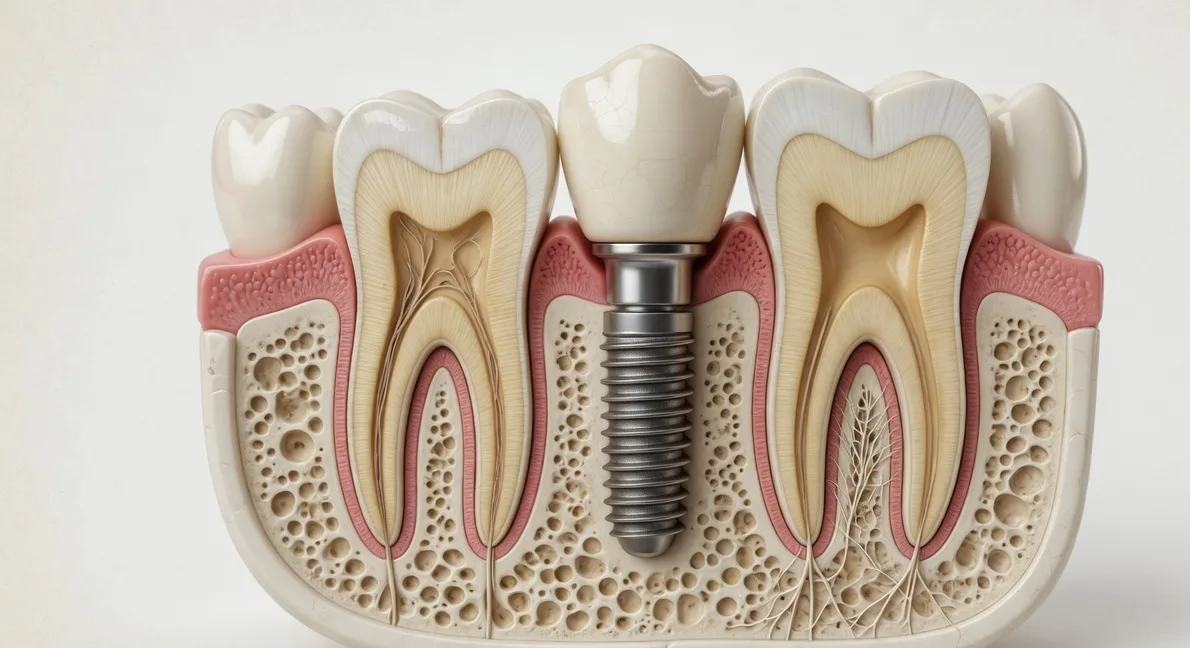
Placement type
This describes where the fixture sits relative to the bone: inside the jaw (endosteal), on the bone under the gum (subperiosteal), or in the cheekbone (zygomatic).
Dental implants are grouped in more than one way. Some names describe where the fixture sits in the jaw. Others describe how many teeth it replaces, or how the final teeth attach. This guide explains the main types used in implant dentistry, which ones we plan at our Bulimba clinic, and how a 3D scan helps decide the fit.
Implant Type Assessment
Patients often hear several names for the same treatment. The useful split is placement (where the implant sits), restoration (what it replaces), and design details such as material, diameter and loading.
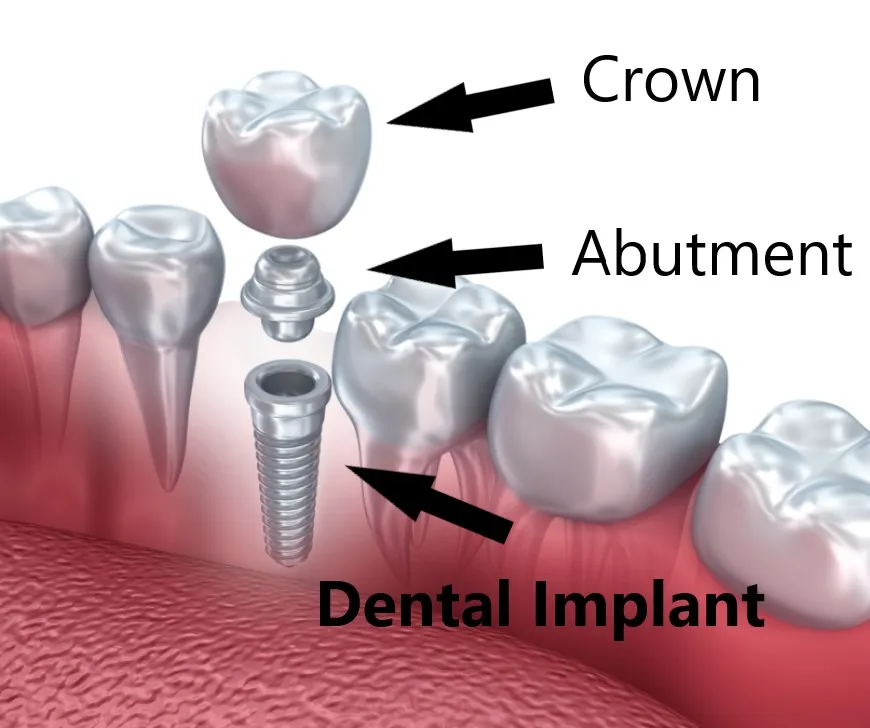
A dental implant is not the visible tooth. The implant is the fixture placed in or against bone. Once it has integrated, a connector (the abutment) joins that fixture to a restoration.
Those three parts can be configured for one tooth or a full arch. The fixture type and the restoration type are chosen separately, which is why two patients can both “need implants” and still receive different treatment.
Textbooks group implants by their relationship to bone. Almost all modern treatment uses endosteal (in-bone) fixtures. The other placement types exist for selected anatomy, not as a menu of upgrades.
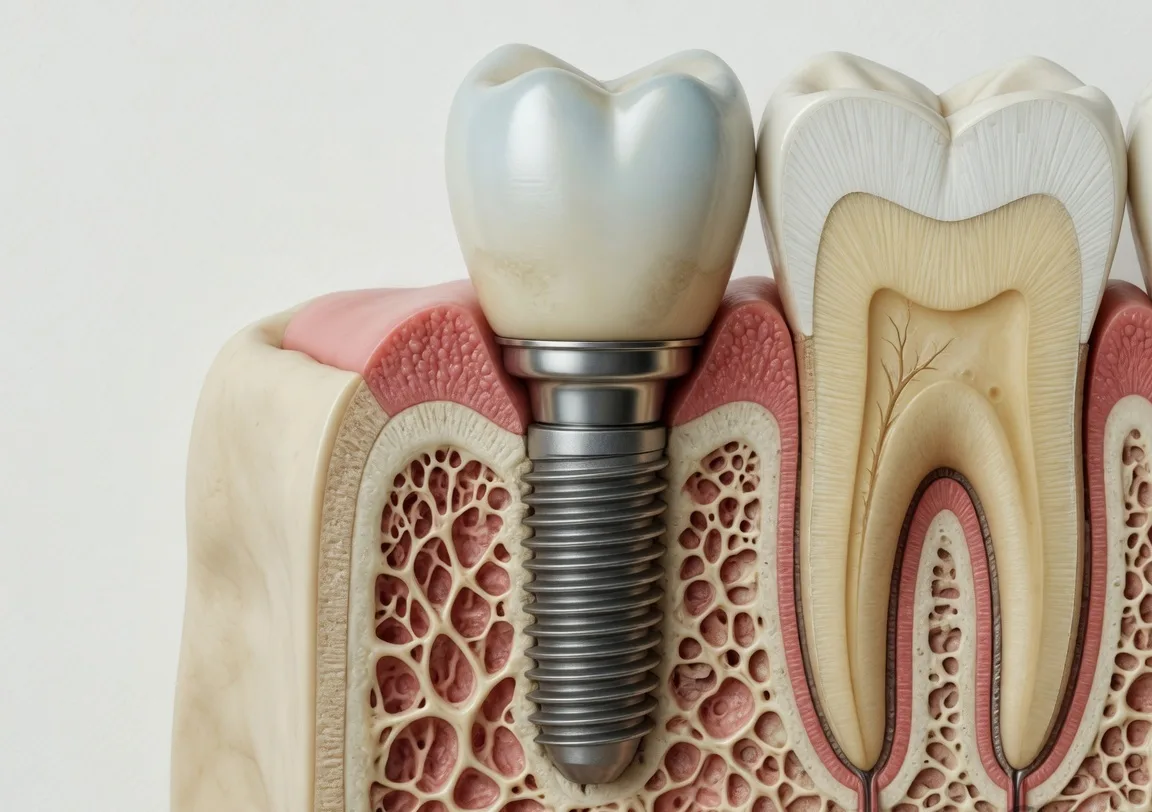
Endosteal implants are root-form fixtures placed directly into the upper or lower jaw. Most are threaded, tapered or cylindrical screws. After healing, they can support a single crown, a bridge or a denture.
They need enough bone height, width and density, healthy gums, and a bite that the restoration can handle. If the ridge is thin or the sinus or nerve is close, the plan may include grafting, a different implant position, or a different restoration rather than forcing a fixture into a poor site.
This is the placement type used for the treatments we plan at Brisbane Dental Implants: single teeth, implant bridges, All-on-4 / All-on-6 and implant-retained dentures. The systems we use are TGA-approved (MIS as the standard system; Astra Tech as the premium option).
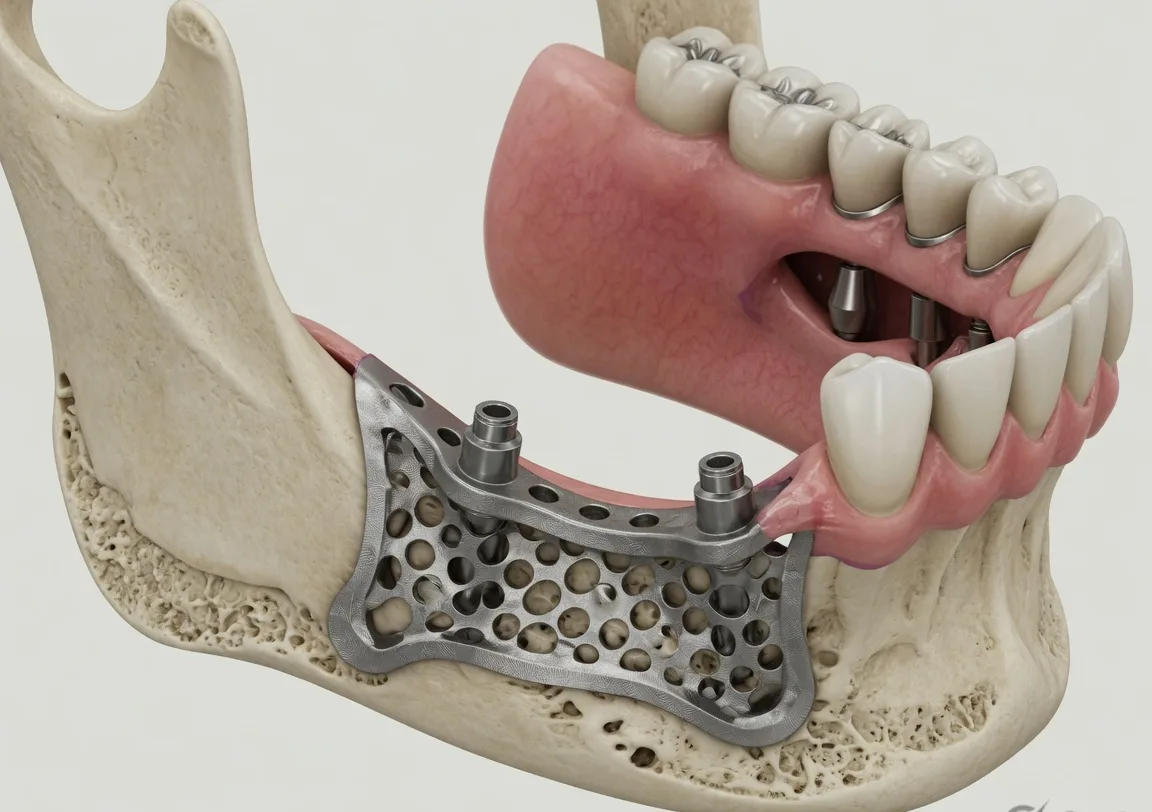
A subperiosteal implant is a custom metal framework that sits on top of the jawbone, under the gum. Posts rise through the gum to hold a restoration. It does not screw into bone the way an endosteal implant does.
This design was used more often when grafting was less predictable. It may still be considered in highly selected cases of severe ridge atrophy where grafting or zygomatic treatment is not appropriate. It is not a routine option, and it is not something we place as standard care at this clinic.
If bone volume is limited, the usual discussion here is whether bone grafting, a sinus lift, ridge preservation, a different number of implants, or a removable implant denture is the more suitable path.
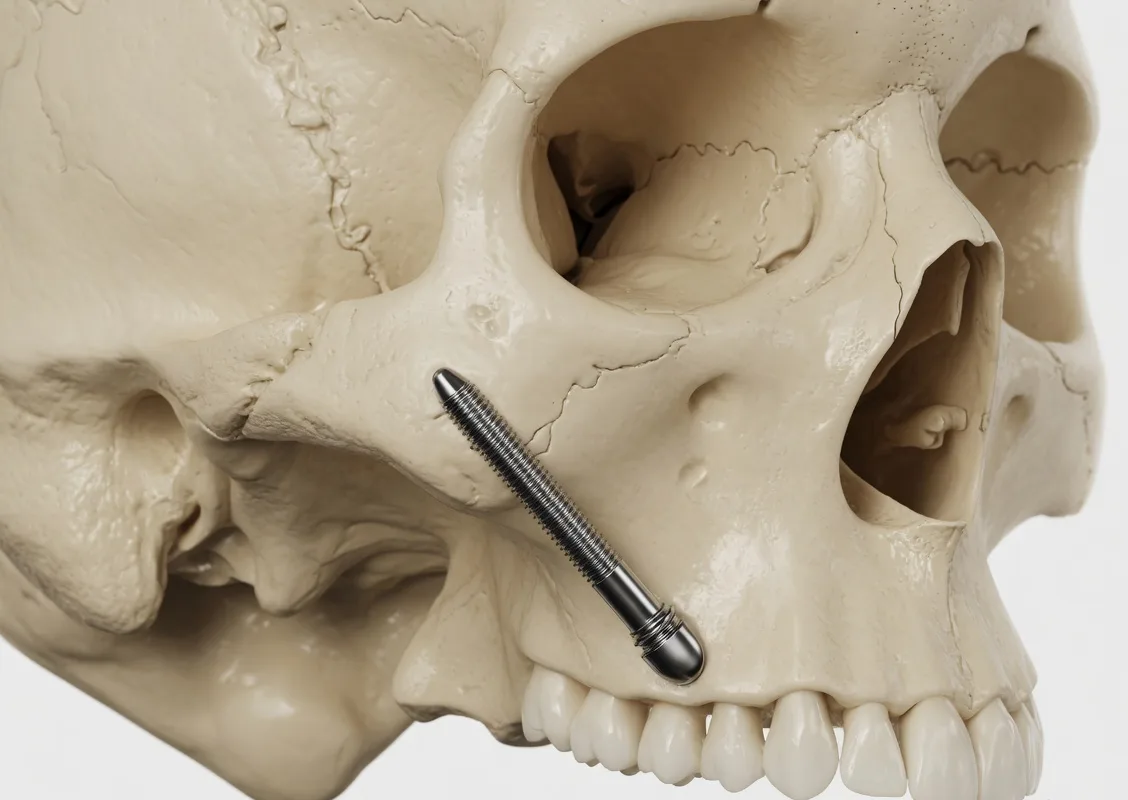
Zygomatic implants are long fixtures, typically around 30 to 52 mm, anchored in the zygoma (cheekbone) rather than in a severely resorbed upper jaw. They may be considered when there is not enough maxillary bone for conventional implants, even with grafting, or when a patient wants to avoid extensive sinus and ridge reconstruction.
This is a complex procedure. It is not the same as a standard implant placed at a steeper angle. The implant path must stay clear of the orbit and use the dense zygomatic bone. It is usually planned for full-arch upper restorations, not for a single missing tooth.
We do not place zygomatic implants as a routine in-house procedure. At this clinic, limited upper-jaw bone is usually planned with grafting, sinus floor elevation, or a different prosthetic design. In selected severe cases, referral for zygomatic treatment can be discussed after the CBCT scan.
Once the fixture type is settled, the restoration is chosen from how many teeth are missing, whether you want a fixed or removable result, and how the prosthesis will be cleaned.
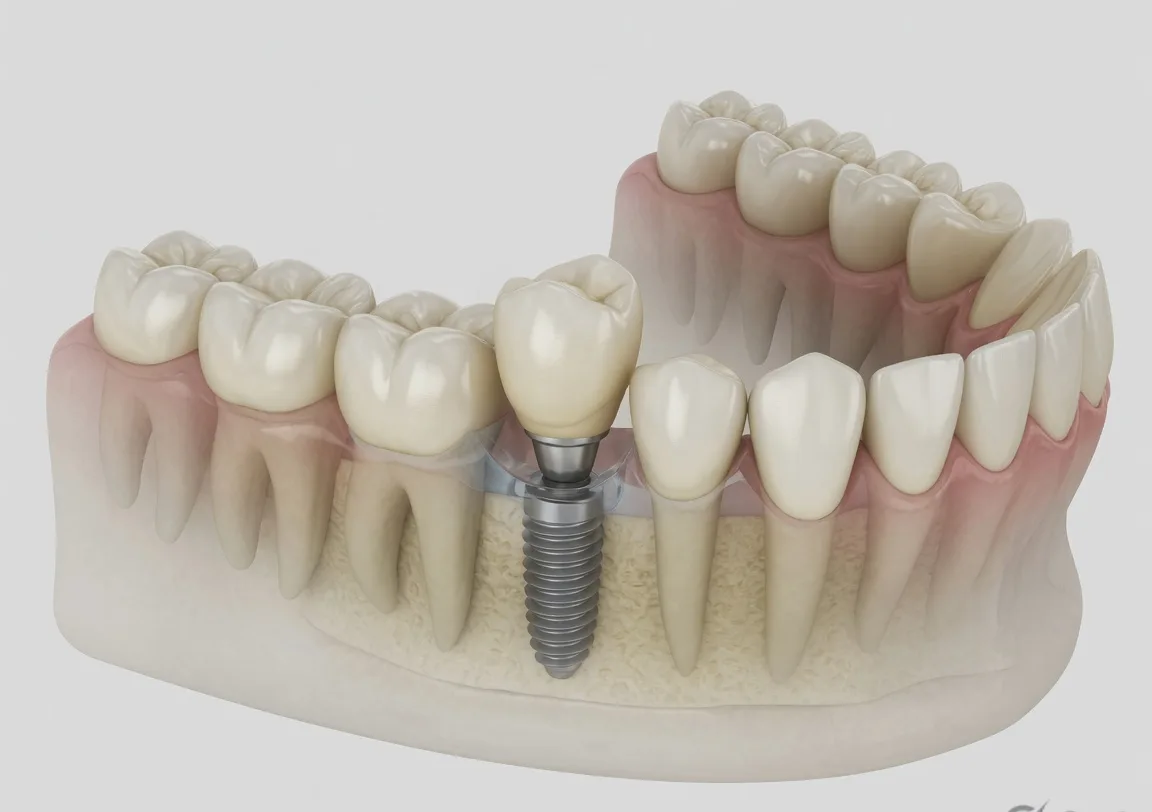
One fixture, one abutment and one crown replace a single missing tooth. Neighbouring teeth do not need to be shaped for a conventional bridge. This is the usual plan when the gap, bone, gum and bite can support an independent crown. See the single tooth implant guide.
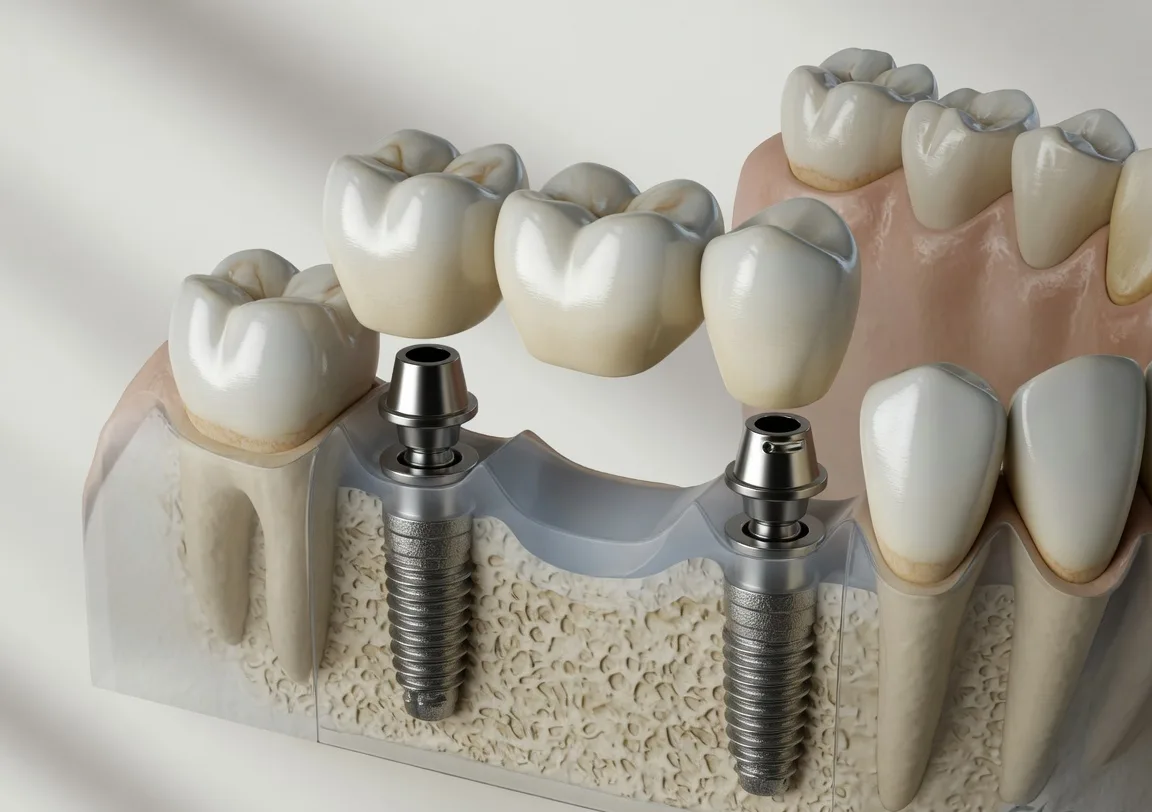
When several adjacent teeth are missing, two or more implants can support a multi-tooth bridge. Not every missing tooth needs its own implant. The span, bite force and bone decide how many fixtures are needed. A conventional tooth-supported bridge remains an alternative if neighbouring teeth already need crowns.
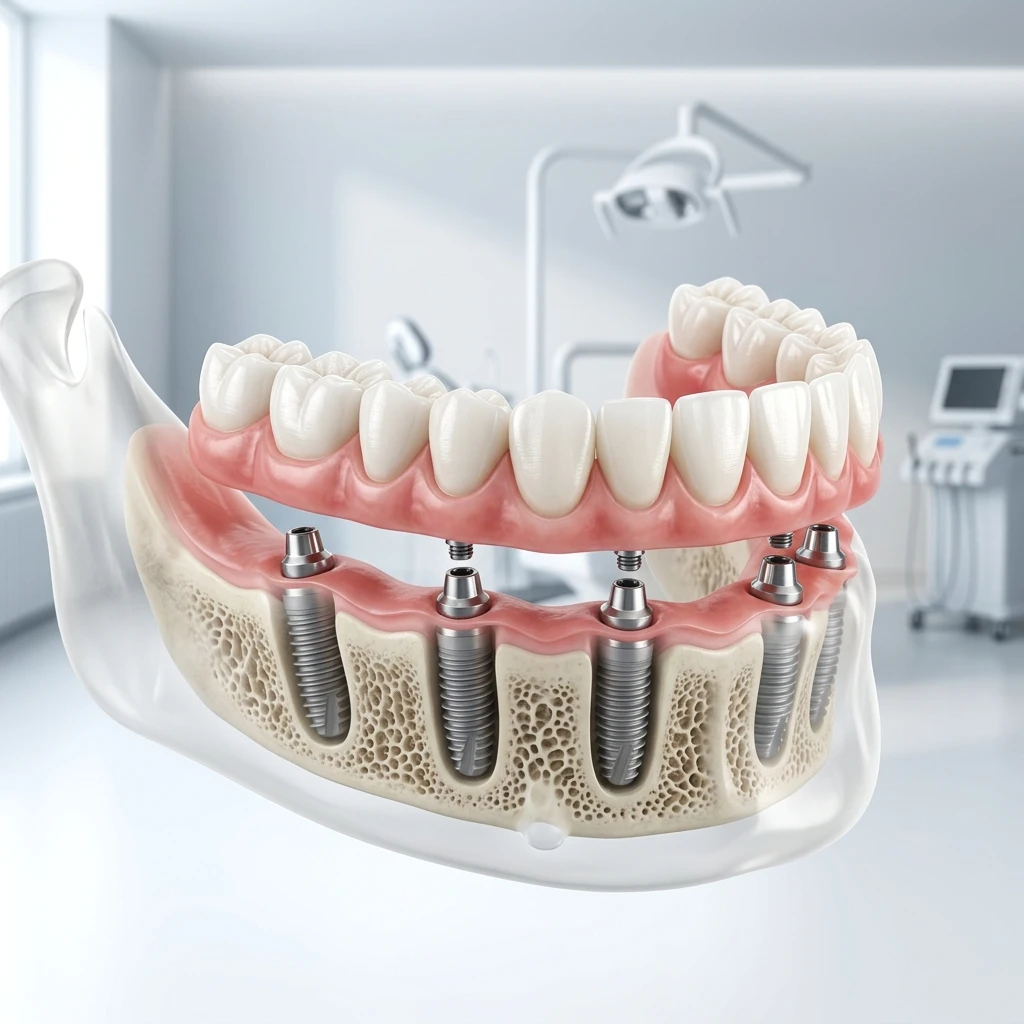
Four to six implants can support a fixed bridge for a whole upper or lower arch. All-on-4 often angles the rear implants to use available bone. All-on-6 may be chosen when extra support is needed. Read the All-on-4 and full mouth guides.
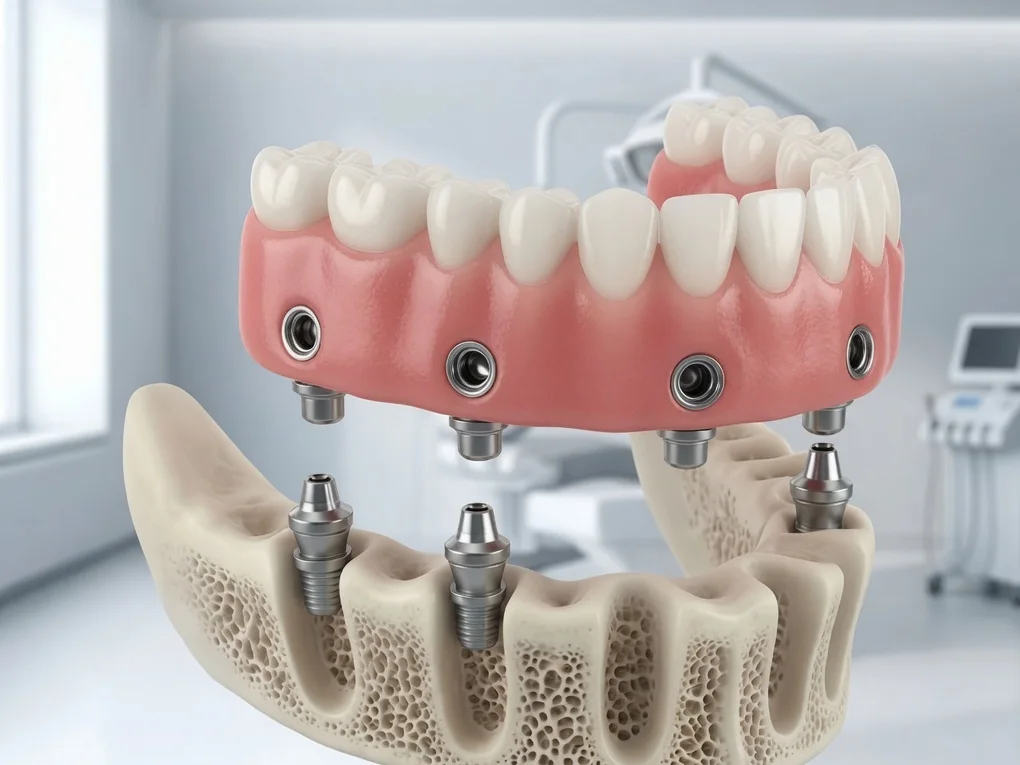
A removable denture clips onto two to four implants with ball, locator or bar attachments. It is more stable than a conventional denture and can be taken out for cleaning. It may suit patients who prioritise hygiene access, repairability or a different fee structure over a fixed bridge.
This table is a starting point, not a diagnosis. Suitability depends on bone, gums, bite, medical history and how the restoration will be maintained.
| Type | Typically used for | Bone needed | Removed by you? | Planned here? |
|---|---|---|---|---|
| Endosteal (standard) | Most single, multiple and full-arch cases | Adequate height and width, or grafting first | No, unless it retains a denture | Yes — this is the usual fixture |
| Single implant crown | One missing tooth with healthy neighbours | Enough bone at that site | No | Yes |
| Implant bridge | Several missing teeth in a row | Bone at the planned implant positions | No | Yes |
| All-on-4 / All-on-6 | Most or all teeth in one arch, wanting a fixed bridge | Bone in key zones; grafting sometimes still needed | No — the team removes it for maintenance | Yes, after 3D planning |
| Implant overdenture | Denture wearers wanting more stability | Lower than a fixed full arch in many cases | Yes, for daily cleaning | Yes |
| Mini / narrow-diameter | Selected narrow ridges or denture retention | Less width, but not a universal substitute | Depends on the restoration | Only if clinically indicated |
| Subperiosteal | Severe atrophy where in-bone fixtures are not feasible | Very little ridge height | Depends on the prosthesis | Not a routine option here |
| Zygomatic | Severe upper-jaw bone loss, usually full-arch | Dense cheekbone rather than the maxillary ridge | No | Referral in selected cases |
Any surgical or invasive procedure carries risks. Before proceeding, you should seek a second opinion from an appropriately qualified health practitioner.
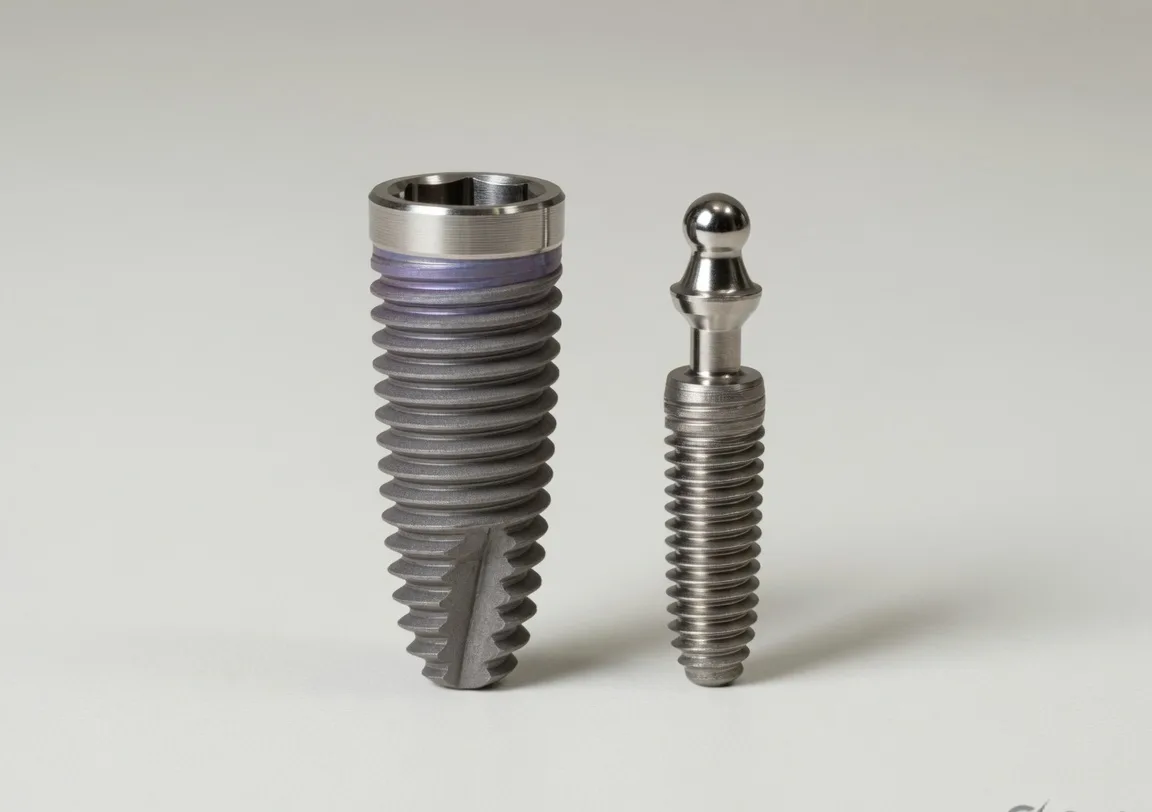
Most fixtures used for crowns and bridges are standard-diameter implants, commonly in the 3.3 to 5 mm range. Wider bodies may be chosen for molars. Narrower bodies may be chosen in a thin ridge or a tight space between roots.
Mini implants are small-diameter fixtures, generally less than 3 mm. They were first used as temporary support and are now sometimes used to retain a lower denture or to work in a very narrow ridge. They have a more limited indication than marketing material sometimes suggests. They are not a low-cost substitute for a standard implant when a standard fixture is the appropriate restoration.
If a site is too narrow, the alternatives are often orthodontic space management, grafting, a different restoration, or accepting that an implant is not the right option. Diameter is chosen from the CBCT scan and the planned crown, not from a preference for a smaller surgery.
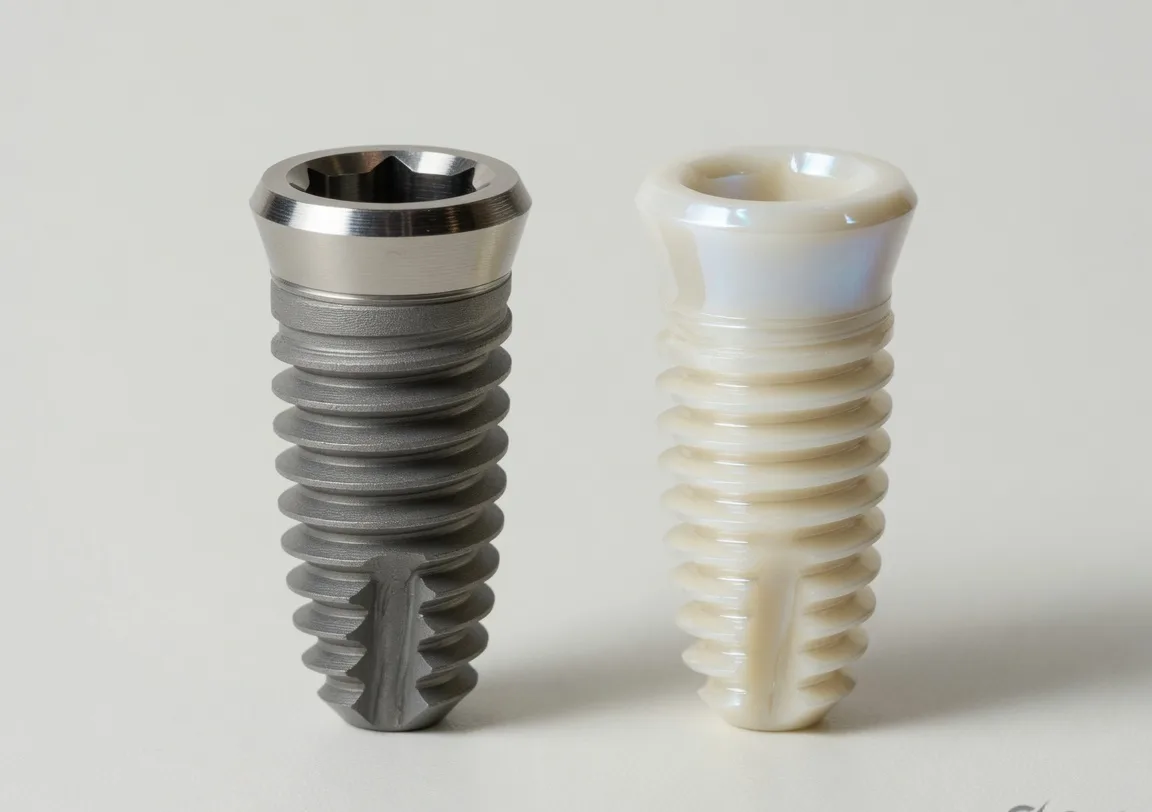
Most implant systems are commercially pure titanium or a titanium alloy. Titanium osseointegrates predictably and has the longest clinical record. The visible tooth on top is a separate component and is often zirconia, porcelain or porcelain-fused-to-metal even when the fixture itself is titanium. That is the usual arrangement at this clinic, with crowns made in the on-site lab.
Zirconia (ceramic) implants are a metal-free alternative. ITI consensus material treats one-piece zirconia implants as an option for selected single crowns and short-span bridges, while noting that evidence for newer two-piece zirconia designs is more limited. There is not strong clinical evidence that zirconia prevents peri-implantitis better than titanium.
A metal-free fixture is a different decision from a metal-free crown. If you have a specific material request, raise it at consultation so the team can explain what is available for your site and restoration.
Placement timing and loading timing are separate decisions. An implant placed on the day a tooth is removed is not automatically a same-day tooth.
Full-arch cases are the setting where immediate temporary teeth are discussed most often. Single front-tooth cases may also use a carefully designed temporary. Many single back-tooth implants still heal without a fixed temporary. The plan should say which protocol is being used and why.
The restoration is planned first. Implant number, position, diameter and whether grafting is needed then follow from that design, not the other way around.
One tooth, a span of teeth, a failing bridge, a loose denture or a whole arch each point to a different restoration family.
A CBCT scan maps ridge height and width, sinus position, the nerve canal, adjacent roots and any existing implants or grafts.
Smile line, gum thickness, grinding, dexterity and whether you can clean under a fixed bridge all affect the design.
Smoking, diabetes control, bone-related medicines, previous radiotherapy and active gum disease can change timing or rule a type out.
You should leave with more than one reasonable path, including a non-implant alternative where it exists, with risks and staged fees attached.
Surgical placement is carried out by Dr Virginia Han or Dr Sae Mi Bok. The restorative phase is usually Dr Elsa Zhu, working with the on-site lab. Both stages sit inside one plan so the crown, bridge or denture matches the implant position that was actually placed.
These are common starting points. They are not a personal recommendation. The examination and scan decide what is actually suitable.
Every implant type is surgery plus a prosthesis that needs maintenance. The risks below should be discussed in consent, with the ones that apply to your anatomy named specifically.
Any surgical or invasive procedure carries risks. Before proceeding, you should seek a second opinion from an appropriately qualified health practitioner. Individual results vary. Images on this page are educational illustrations, not a prediction of your treatment or appearance.
The implant type, number of fixtures and restoration design at Brisbane Dental Implants are planned by the treating clinicians after examination and 3D imaging. A name such as All-on-4 or mini implant should only be used when it matches your scan, bite and maintenance needs — not because it is a familiar label.
See the treatment processThe three placement types usually listed are endosteal (in the jawbone, the standard option), subperiosteal (on the bone under the gum) and zygomatic (anchored in the cheekbone). Patients more often choose by restoration: single crown, implant bridge, full-arch bridge or implant-retained denture.
Endosteal, root-form titanium implants are the usual fixtures for single teeth, bridges and full-arch treatment. At this clinic they are planned with TGA-approved systems (MIS or Astra Tech) after a CBCT scan.
No. A bridge can span a gap from two or more implants, and a full arch can be supported by four to six implants. Putting a fixture under every missing tooth is not always better and can add surgery without improving the restoration.
No. Mini implants are narrower (generally under 3 mm) and are used mainly to retain dentures or in selected narrow ridges. They are not a universal cheaper version of a standard implant crown.
Not automatically. Titanium has the longer clinical record. Zirconia is a metal-free alternative for selected cases. The crown on a titanium implant can still be zirconia. Material choice should follow the site and restoration, not a general preference.
Sometimes a temporary tooth or temporary full-arch bridge can be fitted when stability and bite allow. Immediate placement and immediate loading are separate decisions. Many implants still heal for several months before the final tooth is made.
Not as routine in-house treatment. Limited upper-jaw bone is usually planned with grafting, sinus floor elevation or a different prosthetic design. Severe cases can be discussed for specialist referral after the scan.
Start with the implant hub, then the single tooth, All-on-4, full mouth, cost and bone grafting guides as they apply to your situation.
Request a free initial implant consultation to discuss your options. Our team will contact you to arrange a time. A $200 records fee applies only if you choose to take consultation records away.
You do not need to choose a treatment before contacting us. Your initial consultation includes a clinical assessment and 3D CBCT imaging where clinically required.