
How long after tooth extraction can I get an implant?
From same-day placement to a longer healing period, the right timing depends on the tooth, the surrounding bone and your individual treatment plan.
An implant can sometimes be placed on the day a tooth is removed. In other cases, your dentist may recommend waiting weeks or months for the gum and bone to heal. An examination and imaging help determine which approach is suitable for you.
Three possible placement paths
The implant is placed in the socket at the same visit, if the site allows stable placement.
The site heals first. Clinical protocols include placement at 4–8 weeks or 12–16 weeks.
More healing or preparatory treatment may be needed. Some placements happen more than six months after extraction.
These are illustrative clinical categories, not a schedule or a recommendation for your situation. The final tooth is a separate stage.
Can an implant be placed straight after extraction?
Sometimes. Immediate placement means putting the implant into the socket at the extraction appointment. Your clinician needs to assess whether there is enough suitable bone to hold it securely in the planned position, along with the condition of the gum and socket. The final decision may change during the extraction if the site is different from what was expected.
Immediate placement does not automatically mean an immediate permanent tooth. A temporary tooth may be possible in selected cases; other people need a different temporary option or a period without a tooth in that space.
What happens in the socket?
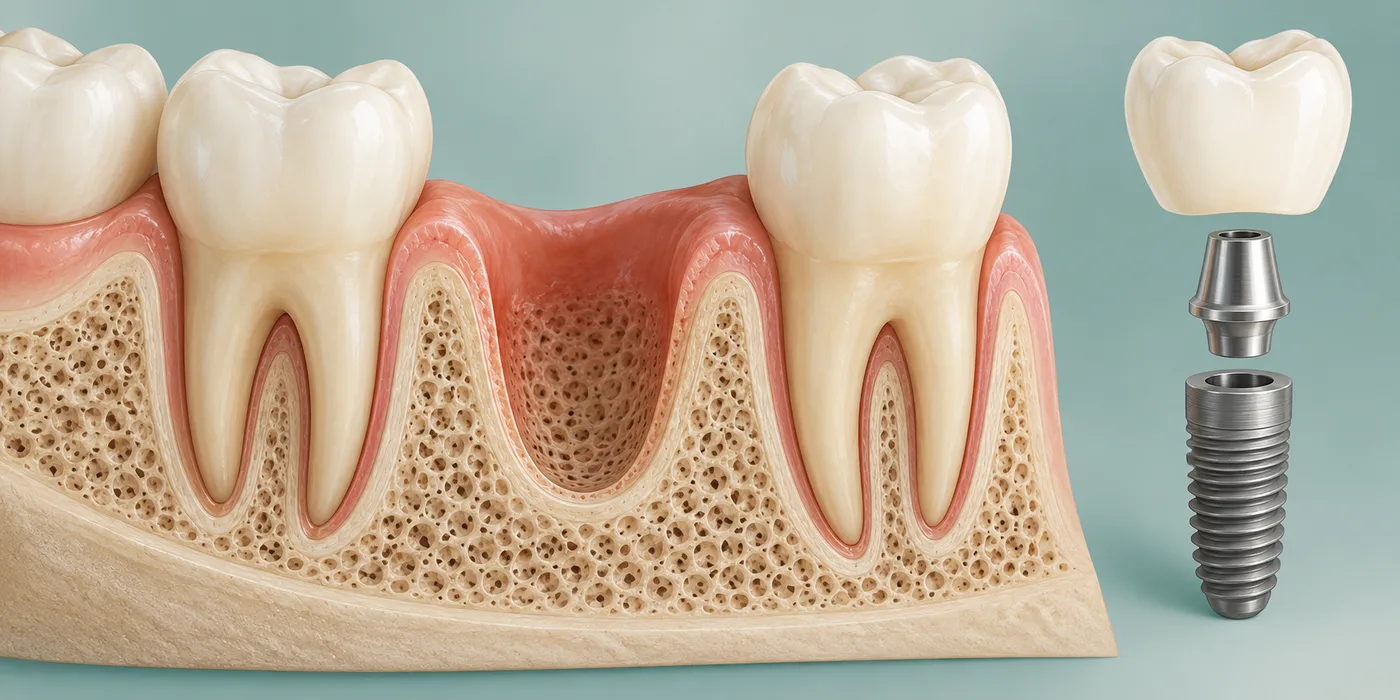
The gum can look healed while the bone beneath it is still changing. Explore four stages to see why placement timing depends on more than the calendar.
The stage descriptions explain the healing process. The interactive illustration appears when 3D graphics are available.
Illustrative cutaway · not to scale
A clot forms in the socket
The animation shows the socket filling with a clot after the tooth is removed. This is the beginning of healing; there is no new bone filling the space yet.
Same-day placement is possible in selected cases when an implant can be stabilised in suitable existing bone. A clot alone cannot provide that support.
The gum closes over
Watch the gum cover the opening. At around 4–8 weeks, soft tissue healing may allow an early placement approach, while bone healing continues beneath the surface.
A closed gum surface does not mean the socket is fully healed. Your clinician still assesses the bone, site health and implant stability.
A new bone network develops
The fine, branching network illustrates new bone developing within the socket. Use the closer view to see the connections between these small structures. At 12–16 weeks, the amount and maturity of this bone can still vary considerably between people and sites.
Placement after partial bone healing is another possible approach. Assessment determines whether the site is ready or needs more healing or grafting.
Bone matures and changes shape
The network becomes more established, while the outer ridge changes subtly. The animation illustrates remodelling, not a fixed amount of bone gain or shrinkage.
Later placement may be appropriate after further healing. Waiting longer does not guarantee enough bone: the ridge dimensions still need assessment.
Why might I need to wait?
Waiting can give the gum or bone time to heal and allows the clinician to manage site-related concerns before placement. Infection, the shape and amount of remaining bone, gum health and the planned position of the replacement tooth can all affect the plan. Medical history and smoking also matter. A scan and clinical examination help identify what is appropriate; a calendar alone cannot.
If bone support is limited, bone grafting may be discussed. A graft can add stages and healing time. If extraction is still ahead, ask whether ridge preservation is appropriate; it does not guarantee an implant will be possible.
Placement is one step in the journey
The order and number of visits vary. Grafting and temporary teeth may add steps.
What can I wear while waiting?
Depending on the position of the gap and your circumstances, a removable temporary partial denture, a temporary bridge or another temporary restoration may be discussed. Some people choose to leave the space temporarily. Each option has limitations, and a temporary appliance may need adjustment during healing. Ask your dentist what is suitable before the tooth is removed.
What if my tooth was removed years ago?
It may still be possible to have an implant. Bone and gum changes, neighbouring teeth and the available space need to be assessed. Some people may need additional treatment; others may be better suited to a bridge or removable denture. See our guide to bridges and implants for a comparison.
Questions to ask at your consultation
- Is immediate placement suitable for this tooth, and what might change that decision?
- Would I need a graft or ridge preservation, and how could that affect the timing?
- What temporary tooth options are available during healing?
- When could the final crown be fitted, and what is included in the written quote?
- What are the risks and alternatives in my circumstances?
Implant surgery carries risks including infection, implant failure and injury to nearby structures. Healing and outcomes vary, and ongoing care is needed. Read more about single-tooth implants and treatment costs.
Sources
General information informed by the following clinical and patient resources:
- International Team for Implantology: implant placement and loading protocols
- Leeds Teaching Hospitals NHS Trust: dental implants
- healthdirect Australia: dental implants
This article is general information and does not replace an individual clinical assessment.
Planning for a missing tooth?
Discuss your timing, options and a personalised treatment plan with our team in Bulimba.
Book a consultation