
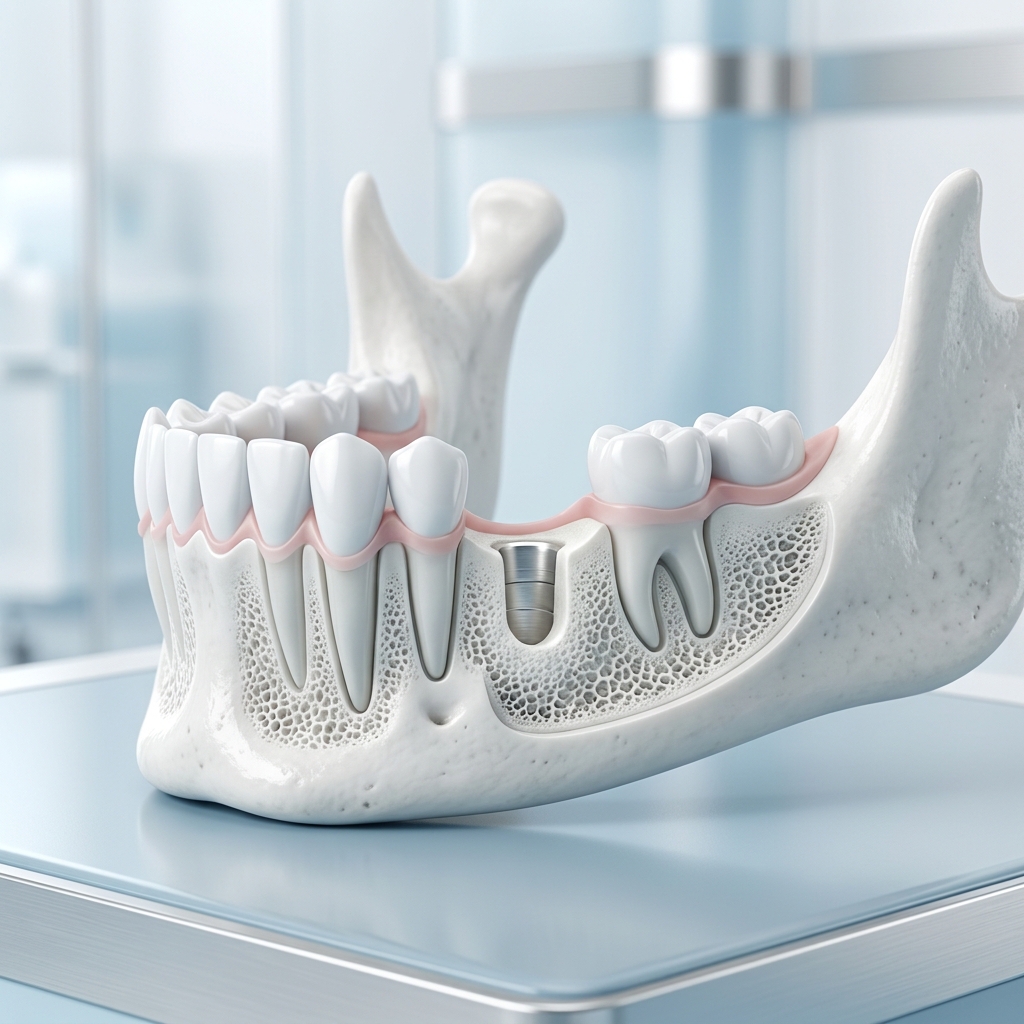
How is major augmentation assessed?
Assessment usually involves examination, periodontal review, CBCT imaging, bite analysis, medical history, and planning the final tooth position before surgery is chosen.
Major bone augmentation may be considered when there is substantial loss of jawbone width, height, or contour after tooth loss, trauma, infection, or previous treatment.
Complex graft assessment
Some implant sites need more than small contour correction. Larger grafting can involve staged surgery, longer healing, temporary tooth planning, and careful maintenance of the final restoration.
Geistlich patient resources describe biomaterials used in regenerative dentistry. Your dentist should still explain the specific material, origin, expected role, and alternatives for your case.
 Source material hosted locally with Geistlich branding retained.
Assessment usually involves examination, periodontal review, CBCT imaging, bite analysis, medical history, and planning the final tooth position before surgery is chosen.
Complex augmentation is often staged over months. Timing depends on the defect, materials, soft tissue closure, infection risk, and implant plan.
Often yes, but the temporary design must avoid pressure on the grafted area while it heals.
Risks include infection, graft exposure, partial graft loss, delayed healing, altered sensation, sinus complications in the upper jaw, and needing further treatment.
Book a free implant consultation at Brisbane Dental Implants to discuss your treatment options with a plan tailored to your mouth.
Submit your details to arrange a clinical assessment.